When You See Something and Aren't Sure if You Should Say Something
How do you choose your voice when the stakes feel too high?

Hey everybody, it’s Jill here.
You know that phrase “if you see something, say something”?
This can be easier said than done, especially when speaking up may come at a cost. But if you think about who benefits from silence, it’s typically perpetrators.
I recently shared a very painful and personal story on a big true crime podcast, Betrayal Weekly. The producers also invited me to share my story on the ABC/Hulu adaptation of the show.
When I discussed it with my family, they strongly objected. This put me in a really tough place in terms of my values.
On the one hand, I care deeply about speaking up, especially when it comes to unpopular topics like child abuse, sexual assault, corruption, and the like. I strongly believe that until we collectively take our heads out of the sand, perpetrators will keep getting away with perpetrating, and victims will keep being victimized. On the other hand, I didn’t want to sacrifice my family relationships, and I was also worried about my safety and the safety of my husband and kids.
Ultimately, I used something I learned from Dr. Sunita Sah when I interviewed her on Psychologists Off the Clock about her excellent book, Defy.
It’s a concept called conscious compliance. When we want to defy, but the stakes feel too high, we might consciously choose to comply, for now. The ‘for now’ is important because ongoing compliance can ultimately result in as much cost as defiance.
When it came to my story, I decided to do three things to resolve the dissonance I was feeling:
1. I opted to do the podcast even though my family wasn’t crazy about the idea. It was more anonymized than the tv show, and the audience, while large, was much smaller than the tv audience would have been.
2. I declined the TV show given that it could not be anonymized and would reach a much larger audience than the podcast. However, I told my family I would comply with their wishes for now, but if my brother (the topic of the story) were to re-offend and/or land back in prison, I reserved the right to speak more broadly at that time.
3. I developed a new podcast. This is where I’m really trying to turn pain into purpose. It’s called We, the Sunshine: Truth illuminates. Stories heal. It’s a documentary style/interview podcast about the brave act of coming forward in a world that too often rewards silence. From whistleblowers to survivors, to those intimately connected to people who’ve caused harm, my guests will share their stories of speaking up and speaking out—why they came forward, what it cost them, and how radical transparency became part of their healing. The title comes from the idea that sunshine is the best disinfectant. The pod is so we don’t have to shine it alone. You can listen to the 1-minute trailer here:
.
My first amazing guest was Juls Bindi, a trailblazing entrepreneur, emotional intelligence advocate, and bold storyteller who has turned her own adversity into purpose. She was one of the first women to speak publicly about being sexually assaulted by Harvey Weinstein before the #metoo movement ever began, and now she writes books for kids about bodily autonomy.
My hope for the podcast is that by sharing our stories, even when it’s hard, even when it’s not popular, we will inspire others to find their voices too. Together we can create a wave of change where victims, not perpetrators, are prioritized and protected.
The podcast won’t be available until I have a few more episodes in the can. SO, if you or anyone you know is a survivor, whistleblower, or similar and you have a story you’d like to share, please reach out. You can email me at jas@jillstoddard.com or schedule a 30-minute zoom consult with me here. Or, feel free to share my Substack with your people. LFG.
Clinical Corner
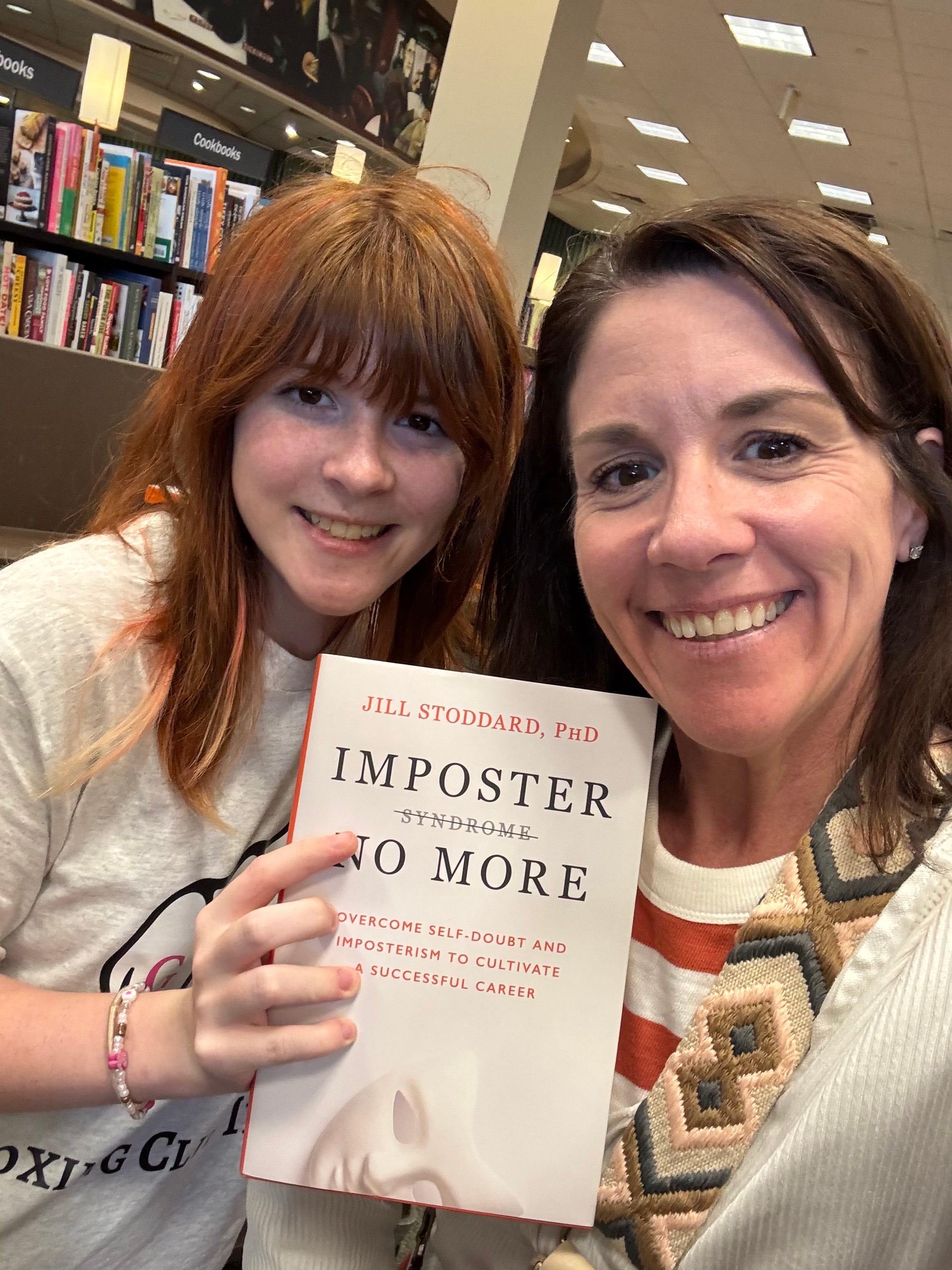
If you are a clinician who wants to level-up your ACT skills, I have three on-demand CE’s you can find here. You can also find a plethora of ACT metaphors and experiential exercises in my book The Big Book of ACT Metaphors.
If you are looking for skills to manage anxiety or imposter “syndrome,” you can check out my books for that here.
If you prefer to learn via podcast, check out Psychologists Off the Clock where we interview experts in psychology about science-backed ideas to help listeners flourish in their relationships, work, and health. Or you can check out interviews I’ve done about anxiety and imposterism here.
I will also be participating in two FREE virtual summits this fall. The topics are:
How Emotional Flexibility Leads to a Life Beyond Trauma and
Living Aligned: Values-Based Living and Navigating Discomfort in Sobriety
Keep your eyes peeled for details as the time draws closer.
My feel-goody of the month
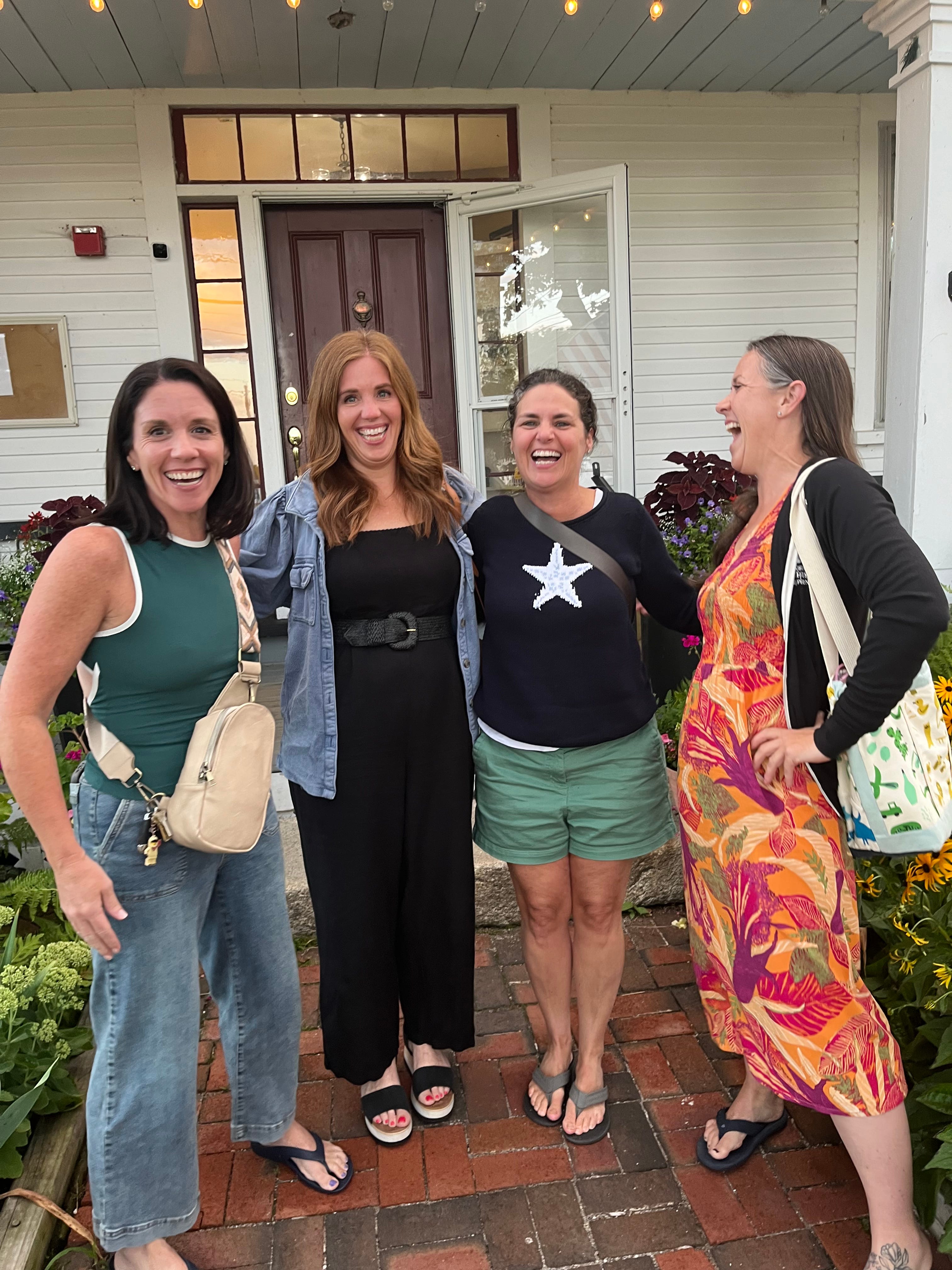
Is there anything better than spending a weekend away from adult responsibilities and just hanging with your besties? Not to me. In August I got to do just that, and will be doing so with another group of gal pals next weekend.
My gratitude of the month

This month I am grateful to Creative Mornings PKX, and to my friend Scarlet Keyes for introducing me to them. Creative Mornings is a place for creative people of all kinds to gather once a month FOR FREE. They have chapters in 252 cities across 70 countries, all of whom share a theme each month. Each meeting features beautiful music by a local performer, an inspiring talk by a local creative, and five 30-second pitches for cool stuff happening around town. I leave every meeting with my soul feeling full. Click the link above to see if there’s a chapter near you, and click Scarlet’s link while you’re at it if you want to hear an incredible viral TED talk or read an inspiring and lyrical book.
My sponsee of the month


My sponsee of the month is certified divorce coach, Tricia Whitcomb.
I had the opportunity to attend a unique fashion show and fundraiser where people modeled and designed bras to benefit women undergoing cancer treatment. Trish, a survivor of stage 3 breast cancer, was one of the models. As part of her cancer recovery journey, Trish realized she was in an emotionally abusive relationship which resulted in a high-conflict divorce and years of post-divorce abuse. Trish turned that experience into purpose by becoming a certified divorce coach working with women to navigate high-conflict divorce and post-divorce abuse.
The decision to divorce isn’t an easy one. If you are going through it and you need an empathetic listener and solution-oriented expert, you can book a free 30-minute consultation by clicking here.
I’d love to hear from you if you want to connect.